

Pelvic Floor Exercises for Men: Why Stronger Isn’t Always Better
When men hear the words pelvic floor exercises, they usually think of Kegels.
Squeeze the muscles. Hold them. Release. Repeat.
The basic idea seems simple: stronger pelvic floor muscles must mean stronger erections, better ejaculation control, and better sex.
But that’s not the whole story.
Not only does your pelvic floor need to be strong. It also needs to be able to relax, lengthen, and respond to what’s happening in your body. And if you’re already walking around with a lot of tension in those muscles, adding more squeezing may not be what your body needs.
For some men, the problem isn’t that the pelvic floor is too weak. It’s that they’ve forgotten how to let it go.
What Is the Male Pelvic Floor?
Your pelvic floor is a group of muscles at the bottom of your pelvis. Think of it almost like a hammock supporting the organs above it.
These muscles play a role in bladder and bowel control, but they’re also involved in sexual function. They help support erections and participate in ejaculation and orgasms.
That makes pelvic floor health important for men’s sexual health. But here’s where things often get misunderstood. A healthy muscle isn’t simply a muscle that can contract hard. It also needs to be able to relax.
Think about your biceps. If you curled your arm and held your biceps tight all day long, you probably wouldn’t call that muscle healthy or functional. Eventually, it would become tired, sore, and less effective.
Your pelvic floor works the same way. Good sexual function requires strength, relaxation, awareness, and coordination.
Assuming Tighter Is Better
Men are often told to strengthen their pelvic floor by doing Kegels.
And pelvic floor strengthening absolutely has its place. Some men may benefit from strengthening these muscles, particularly when weakness is contributing to certain urinary or sexual concerns.
The mistake is assuming every pelvic floor problem is a weakness problem. Sometimes the muscles are already working overtime.
- Stress can make you tighten your jaw.
- Anxiety can make your shoulders creep toward your ears.
- Pressure can make you brace your stomach.
And sexual anxiety can create the same kind of unconscious tension lower in your body.
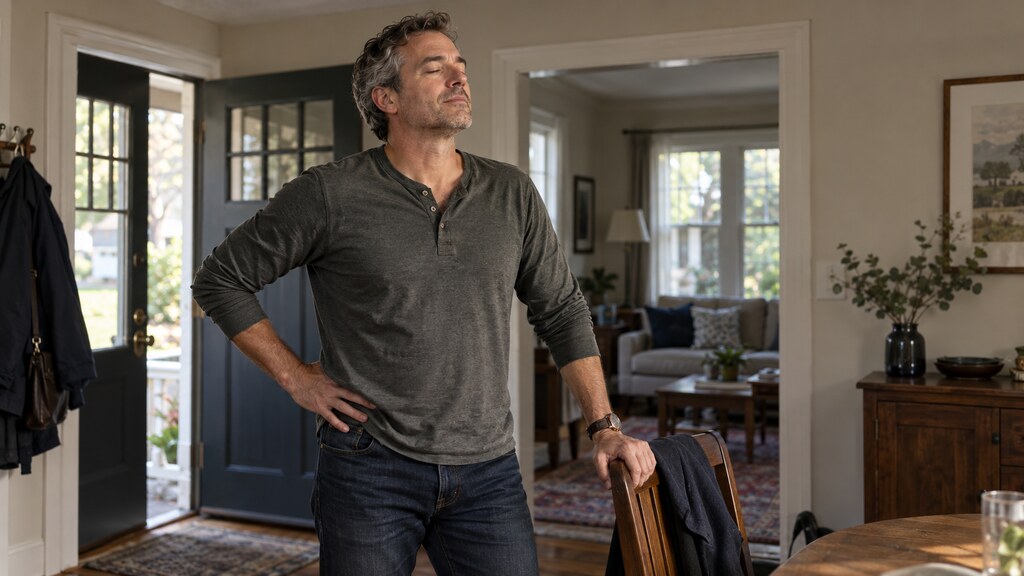
You may tighten your abs, hold your breath, squeeze your glutes, clench your pelvic floor, or tense your legs without even realizing you’re doing it. Then, because you’re worried about your erection or how long you’re going to last, you squeeze even harder.
You’re trying to gain control, but your body may actually need you to stop controlling it so much.
Performance Anxiety Can Turn Into Physical Tension
Performance anxiety isn’t just something that happens in your head. Your thoughts affect what happens throughout your body.
You may start wondering:
- Am I hard enough?
- Am I going to lose my erection?
- Am I going to finish too quickly?
- Is my partner enjoying this?
The more you monitor yourself, the more anxious you become. Your breathing changes, your muscles tighten, and your attention shifts away from pleasure and toward performance. Now sex feels like something you have to accomplish rather than something you get to experience.
That physical tension matters. When your body is braced and your mind is on high alert, it becomes much harder to settle into the sensations that support pleasure and arousal.
That’s why I spend so much time talking to men about getting out of their heads and back into their bodies.
Sexual confidence isn’t created by controlling every physical response. Often, it grows when you learn to trust those responses again.
What Does a Tight Pelvic Floor Feel Like?
Pelvic floor tension doesn’t necessarily feel like an obvious muscle cramp. You might not even realize you’re clenching.
Instead, you may notice things such as:
- Tightness or pressure around the pelvis
- Difficulty relaxing during sex
- Feeling like you’re constantly “holding” your body
- Tension in your abs, glutes, hips, or inner thighs
- Discomfort in the pelvic area
- Urinary symptoms
- Difficulty controlling ejaculation
- Sexual experiences that feel rushed or tense
These symptoms can have many causes, so they shouldn’t automatically be blamed on the pelvic floor. Persistent pain, erectile changes, urinary symptoms, or other physical concerns deserve an evaluation from an appropriate healthcare professional.
But learning to notice whether you’re carrying tension can still be useful. Here’s a quick experiment.
Take a slow breath right now.
As you exhale, notice your stomach, butt, thighs, jaw, and the area around your pelvis.
Are you holding anything tight that doesn’t actually need to be tight?
You may be surprised by the answer.
Why Pelvic Floor Relaxation Matters for Erections
As I have said many, many times, an erection isn’t something you can force. It depends on several systems working together, including your brain, nerves, blood vessels, hormones, and muscles.
That’s part of what makes performance anxiety so frustrating. The harder you try to make your body perform, the more pressure you can create. You may have experienced this firsthand…
You notice your erection changing, so you panic.
Then you start squeezing muscles, changing positions, rushing stimulation, or mentally checking your erection every few seconds.
…Still hard?
…What about now?
…Am I losing it?
At that point, you aren’t really having sex anymore because you’re supervising your erection.
Learning to release unnecessary muscle tension can help shift you away from that constant monitoring and back toward sensation, pleasure, and connection. This is also why breathing can be such an important sexual health tool. When you slow your breathing and allow your body to soften, you’re practicing the opposite of bracing.
What About Kegels?
I am not insinuating Kegels are bad, but Kegels aren’t automatically the answer for every man.
A Kegel is essentially a pelvic floor contraction. One way men often identify these muscles is by imagining the muscles they would use to stop urine or prevent passing gas. Being able to contract those muscles can be useful, but you also want to be able to release them.
Think of good pelvic floor function as a conversation between contraction and relaxation:
Contract. Release. Respond. Relax.
Not:
Squeeze. Squeeze harder. Keep squeezing.
If your muscles are weak, strengthening may be helpful. However, if they’re overactive or chronically tight, additional strengthening without learning to relax may only exacerbate the problem.
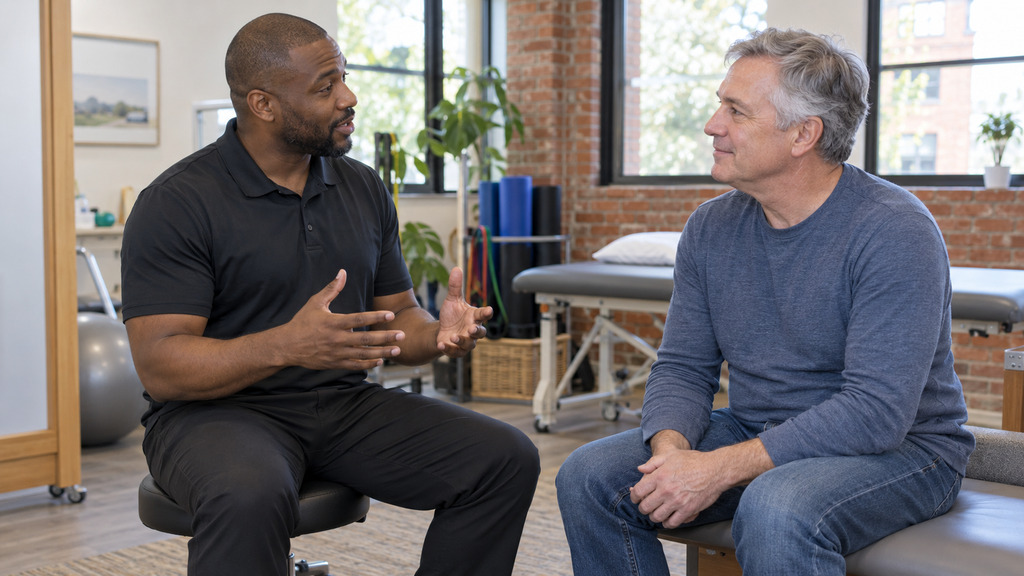
And if you don’t know which situation applies to you, that’s where a pelvic floor physical therapist or other qualified healthcare professional can help.
Try This Instead of Immediately Doing More Kegels
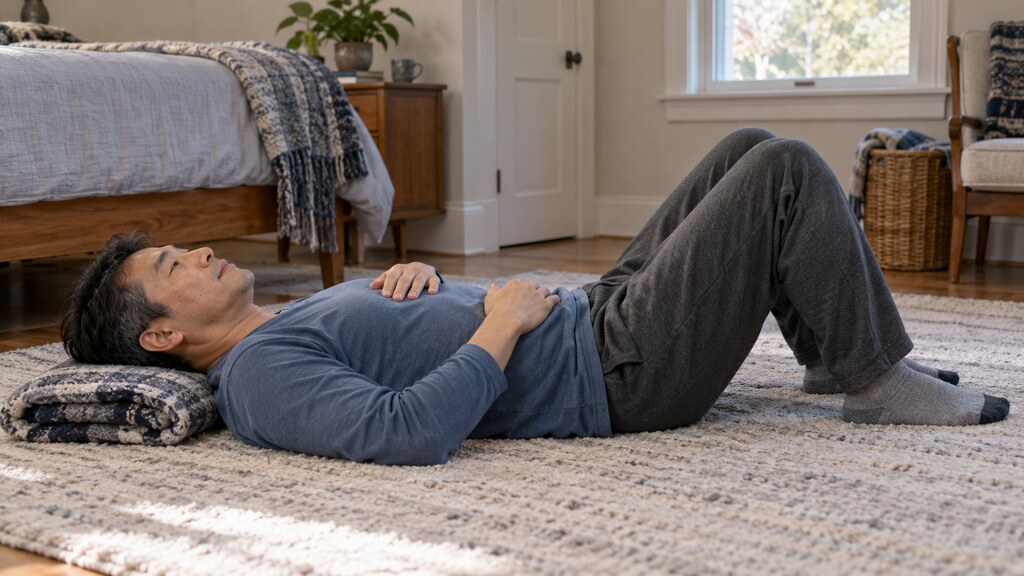
Before adding another set of pelvic floor exercises to your routine, start with awareness.
- Lie down or sit somewhere comfortable.
- Take a slow breath in through your nose and allow your abdomen to expand naturally.
- Then slowly breathe out.
Instead of squeezing anything, notice what happens around your pelvis. Try to let your stomach, glutes, inner thighs, and pelvic area soften. Don’t push down, don’t bear down, and don’t force the muscles to relax. Just notice them. Then repeat the process for several breaths.
It sounds almost too simple, but that’s the point. You’re practicing the ability to recognize the difference between holding tension and letting it go. That awareness can become especially useful during sex.
Pelvic Floor Tension and Ejaculation Control
Men struggling with premature ejaculation often respond by trying harder to control their bodies.
- They tense.
- They clench.
- They hold their breath.
- They mentally repeat, Don’t finish. Don’t finish. Don’t finish.
Unfortunately, that can turn sex into one long battle against ejaculation. Instead of experiencing arousal, you’re fighting it.
A better goal is learning your body’s arousal signals earlier.
- Can you recognize when your breathing speeds up?
- Can you notice when your pelvis begins tightening?
- Can you feel the difference between moderate arousal and the point where ejaculation feels inevitable?
- Can you slow down before reaching that point?
That awareness matters.
I’ve worked with men who describe ejaculation as something that seems to happen suddenly. But when they begin slowing down and paying closer attention to their bodies, they often discover there were signals they simply weren’t noticing before.
The goal is to become more aware of your body so you can respond earlier and with less panic.
Start Paying Attention Outside the Bedroom
If the only time you think about your pelvic floor is when something isn’t going the way you want during sex, it’s going to be much harder to change the pattern.
Practice awareness when there’s no pressure. Check in with your body while you’re working at your desk, driving home, lying in bed, or taking a shower.
Ask yourself:
Am I clenching anything right now?
Notice your:
- Jaw
- Shoulders
- Stomach
- Glutes
- Inner thighs
- Pelvic area
- Breathing
Then let go of whatever doesn’t need to be working. You’re not trying to walk around completely limp and relaxed all day. You’re teaching your nervous system that tension doesn’t need to be the default. That skill can carry into sexual situations.
Bring the Same Awareness Into Sex
The next step is noticing tension during sexual activity without turning it into another performance test.
That part matters.
You don’t want to replace:
Am I hard enough?
with:
Is my pelvic floor relaxed enough?
That’s the same anxiety wearing a different outfit. Instead, periodically bring your attention back to physical sensation.
- Notice your breathing.
- Notice touch.
- Notice warmth.
- Notice pressure.
- Notice your partner.
- Notice what feels good.
And if you catch yourself tightening everything in an attempt to control your erection or ejaculation, see what happens when you soften a little.
This fits into a broader mindfulness approach to sexual health: slowing down, paying attention to physical sensations, and learning how your body actually responds rather than constantly judging its performance.
Better Sex Requires More Than Strength
We tend to think improvement means doing more.
- Lift more weight.
- Work harder.
- Try harder.
- Squeeze harder.
But sexual function doesn’t always follow that rule. Sometimes the better skill is learning when not to contract. Your pelvic floor needs to be able to respond to changing levels of arousal. Your breathing needs to move. Your body needs room to experience sensation.
That’s coordination. And coordination is different from brute strength. The goal here is a pelvic floor that can contract and relax as needed.
When to Get Professional Help
If you’re experiencing ongoing pelvic pain, urinary issues, painful ejaculation, erectile difficulties, premature ejaculation, or other sexual symptoms, don’t assume you simply need more pelvic floor exercises.
Talk with a qualified medical professional to rule out physical causes.
A pelvic floor physical therapist can also assess whether your muscles are weak, overactive, poorly coordinated, or contributing to your symptoms. That’s much more useful than guessing and doing hundreds of Kegels because you saw a video online.
And when anxiety, pressure, or fear around sexual performance is part of the picture, sex therapy can address the mental and emotional side of what’s happening.
Sometimes the issue isn’t only the muscles.
It’s what you’re asking those muscles to do when your brain believes sex is a test.
The Takeaway
Pelvic floor health is about control, awareness, relaxation, and coordination.
If you’re constantly clenching during sex because you’re trying to stay hard, last longer, or maintain control, more tension may not be the solution.
- Start noticing what your body is doing.
- Slow your breathing.
- Pay attention to your arousal.
- Learn what tension feels like and what releasing it feels like.
Because sometimes better sex is about getting out of your own way and allowing your body to respond.
At Mister Health, we help men understand the connection between anxiety, body awareness, erections, ejaculation, and sexual confidence. If sex has started to feel like something you have to manage instead of something you enjoy, you don’t have to keep guessing your way through it.
Learn About Performance Anxiety Support
Stop bracing.
Start responding.