

Why First Responders Need Specialized Trauma Support
Boston-Based | Virtual Therapy for Men Across Massachusetts
Always Strong on the Outside. Carrying It Alone on the Inside.
First responders, firefighters, EMTs, police officers, and military veterans are trained to run toward danger. You’re the one people call in their worst moments. You stay calm, make decisions, save lives.
But what happens afterward?
For many men in Massachusetts who serve in these roles, trauma piles up quietly: the images you can’t unsee, the helplessness when outcomes don’t go your way, the stress of constant vigilance. And because you’re trained to be “strong,” you don’t talk about it.
That’s why first responders need specialized trauma support. Not generic counseling, but therapy designed for the unique pressures of high-stress, life-or-death work.
Why Trauma Hits First Responders Differently
1. Repeated Exposure
Unlike one-time traumatic events, first responders face trauma again and again. Each call adds to the weight.
2. Hyper-Responsibility
When lives are in your hands, every outcome feels personal, even when it isn’t.
3. Culture of Silence
In high-stakes fields, talking about emotions is often seen as a weakness. Many men learn to bury trauma instead of process it.
4. Shift Work & Stress
Irregular hours, disrupted sleep, and adrenaline spikes put first responders at higher risk for anxiety, depression, and PTSD.
Common Trauma Symptoms in First Responders
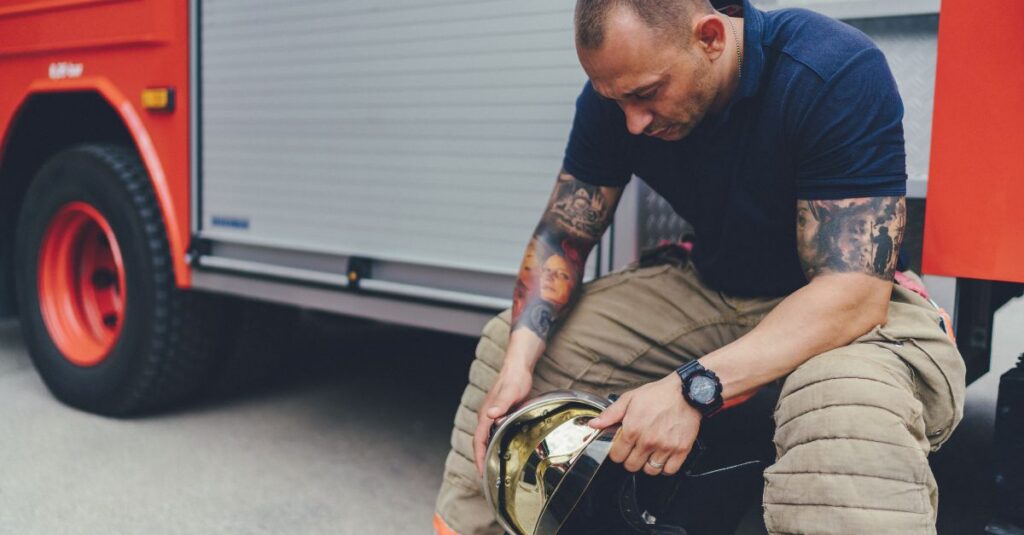
Trauma for first responders doesn’t always show up as flashbacks. Often, it looks like:
- Irritability or having a short fuse with family.
- Difficulty sleeping, nightmares, or restless nights.
- Feeling “numb” or detached after calls.
- Always on edge, scanning for threats even when off duty.
- Drinking, gambling, or porn use to unwind.
- Trouble connecting emotionally with partners or kids.
- Guilt over incidents, even those out of your control.
These aren’t personality flaws. There are signs your nervous system is stuck in survival mode.
The Cost of Ignoring Trauma for First Responders
- Relationships: Emotional withdrawal creates distance from partners and kids.
- Work: Burnout, mistakes, or loss of motivation creep in.
- Health: Chronic stress raises blood pressure and heart disease risk, and weakens immunity.
- Self-Worth: Guilt, shame, or identity struggles worsen, sometimes leading to depression or substance use.
Too many first responders suffer in silence, telling themselves, “I can handle it,” until the cost is too high.
Why Specialized Trauma Support Matters
First responders need more than general “stress management.” They need therapy that understands:
- The impact of repeated exposure to trauma.
- The culture of silence in police, fire, EMT, and military communities.
- The physical toll of irregular schedules and adrenaline spikes.
- The importance of confidentiality and trust.
Specialized support helps men feel understood, not judged or misunderstood.
Tools First Responders Can Use Right Now

1. Decompression Rituals
Don’t just move from call to couch. Create a short routine (shower, stretch, journaling, breathing) to transition from work mode to home mode.
2. Grounding Practices
When images or stress spike, use grounding: name 5 things you see, 4 things you feel, 3 things you hear, 2 things you smell, 1 thing you taste. It brings you back to the present.
3. Sleep Protection
Prioritize sleep routines. Dark room, no screens before bed, consistent rituals. Poor sleep worsens trauma symptoms.
4. Peer Support
Talk with trusted colleagues who get it. Silence breeds isolation; conversation reduces shame.
5. Professional Counseling
The most effective step: trauma therapy that addresses both the nervous system and the unique culture of first responders.
How Counseling Helps First Responders Heal
At MisterHealth, we work with men across Massachusetts who serve as police, firefighters, EMTs, and veterans. Counseling helps you:
- Process trauma safely without re-traumatization.
- Learn tools to regulate stress in the moment.
- Reduce anger and irritability at home.
- Reconnect emotionally with partners and kids.
- Break reliance on alcohol, porn, or other numbing strategies.
- Separate your identity from your job, remembering you’re more than what you see on duty.
Why First Responders Work With MisterHealth
- Therapy Built for Men. We understand the pressures of service roles and how trauma shows up differently in men.
- Boston-Based, Statewide Access. Virtual sessions available anywhere in Massachusetts.
- Private & Confidential. Secure, online therapy with no stigma attached.
- Led by Dr. Michael Stokes. Licensed therapist with experience helping first responders and veterans manage trauma and PTSD.
Serving First Responders Across Massachusetts
Mister Health provides virtual trauma and PTSD counseling statewide:
Boston • Worcester • Springfield • Cambridge • Lowell • Quincy • Brockton • Lynn • New Bedford • Fall River
Office Address (for SEO & mailing):
198 Tremont St, Boston, MA 02116
Healing Without Losing Your Edge
Picture sleeping through the night without nightmares. Coming home and being present with your family. Handling stress without exploding or numbing. Feeling like yourself again, strong, capable, and steady.
That’s possible. Trauma support for first responders can help you build it.