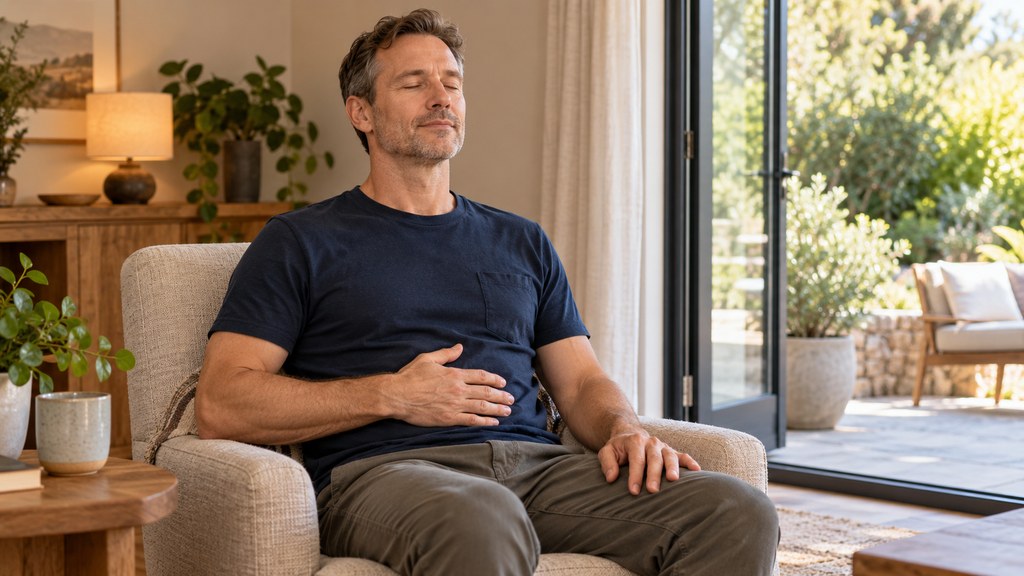


Are You Holding Your Breath During Sex?
Serving Men Across Massachusetts & Connecticut | In-Person & Virtual Therapy
You’re in the middle of having sex…everything feels great. But then something suddenly changes. Maybe your erection starts to fade, or maybe you’re getting close to finishing sooner than you want. Now, you’re thinking about what your body is doing instead of enjoying what’s happening.
Naturally, you start trying harder, hoping to get things back on track. But the more you focus on fixing the problem, the worse it seems to get.
How are you breathing?
When men experience sexual performance anxiety, they often focus on their erections, stamina, or ability to satisfy their partner. All important to think about, but very few pay attention to how they’re breathing.
Your breathing patterns influence your nervous system, muscle tension, and ability to stay present during sex. And understanding that connection can be so helpful in your approach to arousal.
The Connection Between Breathing and Sexual Arousal
Sexual arousal involves much more than physical stimulation. Your brain, nervous system, blood vessels, emotions, and thoughts all work together to create a sexual response.
Breathing is part of that process because it interacts with your autonomic nervous system, which controls automatic functions like your heart rate, digestion, and sexual response.
Your autonomic nervous system has two main branches:
- Sympathetic nervous system: Responsible for your body’s fight-or-flight response. It becomes more active when you’re stressed, anxious, or excited.
- Parasympathetic nervous system: Supports rest, relaxation, and many of the physical processes involved in erections.
Both systems play roles in healthy sexual function. The problem occurs when anxiety triggers a stress response that interferes with your ability to enjoy arousal.
For example, when you’re worried about maintaining an erection, your breathing may become faster and shallower. Your muscles tighten, your heart rate increases, and your attention shifts toward monitoring your performance.
Your body may be physically stimulated, but your mind treats the experience as a test.
Learning to recognize these changes allows you to respond before anxiety takes over.
What Happens to Your Breathing When Anxiety Kicks In?
Think about what happens when you’re nervous before a job interview or an important presentation. Your breathing changes without you consciously deciding to change it.
The same thing can happen during sex.
When performance anxiety shows up, you may experience several breathing patterns that contribute to physical tension and discomfort.
Shallow Chest Breathing
Instead of allowing your abdomen and lower ribs to move naturally, you begin taking short breaths into your upper chest.
This pattern often accompanies stress and can make you feel more tense or alert. If you’re already worried about your sexual performance, that physical tension may reinforce the anxiety you’re experiencing.
Holding Your Breath
Some men unknowingly hold their breath during intense stimulation, particularly when they’re concentrating on maintaining an erection or delaying ejaculation.
Brief breath-holding during excitement isn’t necessarily harmful. However, repeatedly holding your breath while tightening your muscles can make sex feel more physically demanding.
It can also become part of a pattern where you’re trying to control every sensation instead of allowing yourself to experience pleasure.
Pelvic Floor Tension
Your pelvic floor muscles support bladder control, erections, and ejaculation. They also coordinate with your diaphragm during breathing.
When you’re anxious, you may tighten these muscles without realizing it. Persistent pelvic floor tension can contribute to discomfort and interfere with sexual function in some men.
The important thing to understand is that breathing, muscle tension, and anxiety can influence one another.
You don’t have to feel anxious for your body to respond to stress consciously.
Why Faster Breathing Doesn’t Always Mean Better Arousal
It’s completely normal for your breathing and heart rate to increase as sexual excitement builds. Faster breathing isn’t automatically a problem, and slow breathing isn’t required for healthy arousal.
The difference is whether your breathing changes naturally with excitement or becomes part of an anxious response.
Consider these two situations:
In the first, you’re enjoying sex, feeling connected to your partner, and becoming increasingly excited. Your breathing gets faster because your body is responding to pleasure.
In the second, you’re worried about losing your erection. Your breathing becomes rapid, your chest tightens, and your thoughts start racing.
The breathing may look similar, but the experiences are very different.
The goal is to recognize when anxiety is driving your breathing and learn how to respond.
That awareness can help you feel more comfortable with changes in arousal rather than interpreting every change as a problem.
How to Use Breathing to Support Sexual Arousal
You don’t need complicated breathing exercises or a strict routine to begin developing better awareness. In fact, turning breathing into another performance task can create more pressure.
Instead, focus on a few simple habits that encourage relaxation and help you reconnect with your body.
Practice Comfortable Nasal Breathing
Breathing through your nose can encourage a slower, more comfortable breathing rhythm when you’re relaxed.
Try sitting somewhere quiet and breathing naturally through your nose for a minute or two. Notice how the air feels as you inhale and exhale. You don’t need to force deep breaths or count every second.
During intimacy, nasal breathing may be a helpful way to settle yourself when you notice anxiety building. However, breathing through your mouth during physical excitement is also completely normal.
Make Your Exhale a Little Longer
When you’re feeling anxious, gently extending your exhale can help you relax.
Try this simple exercise:
- Breathe in comfortably for about four seconds.
- Exhale slowly for about six seconds.
- Keep your shoulders and jaw relaxed.
- Repeat for a few breaths without forcing the rhythm.
If that timing feels uncomfortable, shorten it. The goal is to breathe comfortably, not to take the biggest breath possible.
Practicing this outside the bedroom can make it easier to use when you’re feeling nervous.
Allow Your Belly to Move
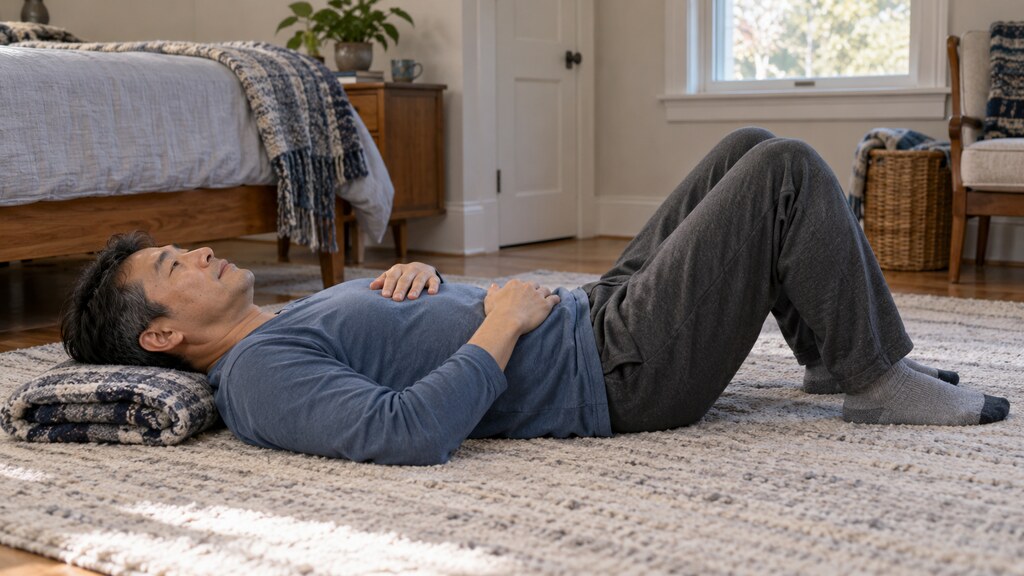
Many men carry tension in their abdomen without noticing it.
Place one hand on your stomach and take a comfortable breath. Notice whether your abdomen moves gently outward as you inhale and returns as you exhale.
This movement happens as your diaphragm works with the muscles involved in breathing.
You don’t need to push your stomach out or exaggerate the movement. Simply allow your body to breathe without unnecessary tension.
As you practice, notice whether your abdomen, shoulders, and pelvic area feel more relaxed.
Notice Your Breathing During Arousal
This is where breathing awareness becomes particularly useful.
The next time you’re sexually aroused, whether alone or with a partner, take a moment to notice what’s happening in your body.
Ask yourself:
- Am I breathing comfortably or holding my breath?
- Are my shoulders, stomach, or pelvic muscles tense?
- Am I focused on pleasure or worrying about performance?
- Can I relax my body without trying to control my arousal?
You don’t have to stop everything and perform a breathing exercise.
Sometimes, simply noticing that you’re tense and allowing yourself to exhale is enough to help you refocus on the experience.
Breathing Can Help You Get Out of Your Head

One of the biggest challenges I see with sexual performance anxiety is how quickly men shift from experiencing pleasure to evaluating their performance.
Instead of noticing their partner’s touch, they start asking themselves whether they’re hard enough, lasting long enough, or doing everything correctly.
Breathing awareness offers a way to interrupt that pattern.
When you notice your thoughts drifting toward performance, bring your attention back to something physical. It might be the feeling of your breath, your partner’s skin, or the movement of your body.
This is a form of mindfulness that can help you reconnect with what’s happening rather than getting caught up in what might go wrong.
You can also practice this approach through sensate focus, a sex therapy exercise that encourages couples to explore touch and pleasure without making erections, penetration, or orgasm the goal.
The more comfortable you become experiencing sensation without judging it, the less pressure you may feel to control every part of sex.
What If Breathing Exercises Don’t Fix the Problem?
Breathing awareness can be a useful tool, but it isn’t a cure for every sexual concern.
Erection difficulties, changes in ejaculation, and reduced sexual desire can have several causes, including medical conditions, medications, relationship concerns, and psychological stress.
If you’re experiencing ongoing sexual difficulties, a healthcare professional can help identify possible causes.
When performance anxiety is part of the problem, sex therapy can help you understand the thoughts, expectations, and behaviors contributing to that anxiety.
We can work on reducing pressure, improving communication with your partner, and developing a healthier relationship with sexual pleasure.
You don’t have to wait until your sex life feels completely out of control to ask for support.
Better Sex Starts With Less Pressure
Your breathing doesn’t control every aspect of your sex life, but it can tell you something important about how your body is responding.
When you’re anxious, your breath may become shallow, your muscles may tighten, and your attention may shift away from pleasure.
When you learn to recognize those changes, you have an opportunity to slow down, release tension, and reconnect with the experience.
Remember, the goal is to feel comfortable in your body, enjoy intimacy, and stop treating sex like something you have to get right every time.
If performance anxiety is making it difficult to enjoy sex, we can help. We work with men to understand what’s happening beneath the anxiety and build greater sexual confidence.
Schedule an appointment and start working toward a more relaxed, confident, and satisfying sex life.